 The Cost of Not Knowing
 By Valerie Maldonado Sandoval
Growing up in Greenville, South Carolina, I believed I already knew what my future looked like.
As the only daughter in a working-class Latino family—half Salvadoran and half Mexican—I helped care for my siblings while balancing school, church choir, baking, building Legos, and every opportunity I could find. Like many first-generation students, I dreamed of earning a college degree. I just assumed that dream had to fit within my family’s financial reality.
To me, that meant staying close to home.
I attended Legacy Early College, a predominantly Black and Latino public charter school that prepared me well academically. Through its dual-enrollment program, I graduated in May 2026 with both my high school diploma and an associate degree. My school taught us how to save money by earning college credits early, which opened many doors for students like me.
But it wasn’t until I joined TeenSHARP, a nonprofit that helps high-achieving students from underrepresented backgrounds navigate selective college admissions, that I realized something even more valuable than saving money: having access to the right information.
Coming into the program, I was nervous. I didn’t know what to expect. It’s daunting being the first in your family to navigate a process no one else has experienced.
Like many first-generation students, I assumed nearby colleges would be the most affordable option.
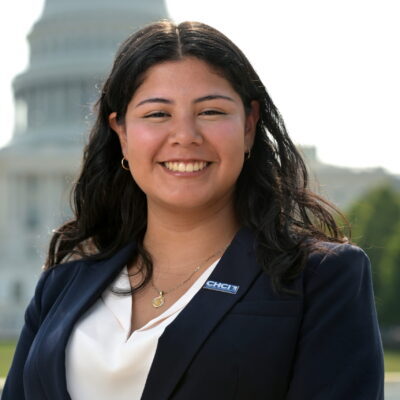
Through one-on-one advising, I participated in college fly-in programs that took me far beyond South Carolina. I visited campuses and connected with students, faculty, and admissions staff in Washington, D.C., Pennsylvania, Connecticut, North Carolina, and other parts of the country—places I never imagined I would see while I was in high school. I also participated in a public policy program in Washington, D.C., with the Congressional Hispanic Caucus Institute, studied at the University of Cambridge, and met students and professionals whose experiences expanded my understanding of what was possible. More importantly, I learned how to evaluate colleges based on financial aid, not sticker price.
Sara Petty, TeenSHARP’s senior director of pre-college programming, became one of the most influential mentors in my journey. She encouraged me to explore schools I never would have considered on my own and to approach every decision with intention instead of fear. Many of the opportunities TeenSHARP encouraged me to pursue weren’t in my home state, but I learned that growth often begins when you’re willing to go beyond what’s familiar.
That guidance changed my life.
Like many first-generation students, I initially limited my college search because I thought it was the responsible thing to do. But when I compared financial aid offers and used net price calculators, I discovered that some colleges hundreds of miles away would actually cost my family less than schools close to home.
Every assumption I had about college affordability turned out to be wrong.
Using the Common Application, I applied to more than ten colleges both in and out of state—in hindsight, I wish I applied to more. Ultimately, I chose Davidson College because it offered me a full financial aid package. It was something I never imagined possible when I first began my college search.
My story isn’t unique because I’m exceptionally talented. It’s unique simply because someone told me what was possible. That’s something I wish every student had.
Too many talented students rule themselves out before they ever submit an application. Once I realized how many opportunities students were missing simply because they didn’t know they existed, I began sharing resources and program announcements with my classmates and peers. You can’t pursue opportunities you don’t know exist.
Today, I plan to study medicine while pursuing public policy or political science, combining my passion for healthcare, ethics, and public service. I’ll also become the first student from my high school to attend Davidson College. I hope I’m not the last.
If I could offer one piece of advice to every first-generation student, it would be this: don’t decide where you belong before you’ve explored your options. Apply. Ask questions. Compare financial aid packages. Challenge the assumptions you’ve inherited.
You cannot choose opportunities you never knew existed.
Talent exists in every community. Access does not.
Closing that gap may be one of the most powerful investments we can make in the next generation. Schools, policymakers, and philanthropists should invest not only in scholarships, but also in college advising and mentorship.